Understanding the Sustainable Development Goals: A Guide for Sustainability Strategies of Small Businesses
- hrvatinstella
- Nov 2, 2024
- 3 min read
The Sustainable Development Goals (SDGs), established by the United Nations in 2015, provide a framework for organizations to contribute to a more sustainable future. In this post, we will explore what the SDGs are, how companies can integrate them into their sustainability strategies, and provide examples of how small businesses can make a meaningful impact.
What Are the Sustainable Development Goals?
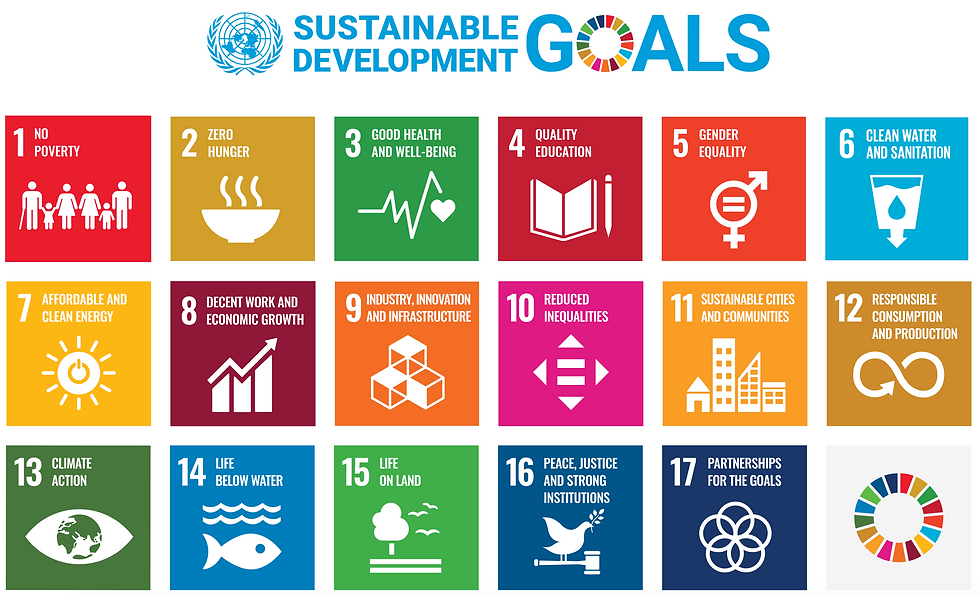
The SDGs consist of 17 interlinked global goals designed to address various social, economic, and environmental challenges by 2030. These goals encompass a wide range of issues, including poverty alleviation, gender equality, clean water and sanitation, climate action, and sustainable economic growth. Each goal has specific targets and indicators to measure progress, creating a comprehensive framework for governments, organizations, and individuals to work towards a better world.
How Companies Can Use the SDGs to Create a Sustainability Strategy
Integrating the SDGs into a company’s sustainability strategy provides a clear direction. Here’s how businesses can leverage the SDGs:
Assessment
Identify Relevant Goals: Companies should start by assessing how their business model negatively impacts SDGs and what kind of positive contribution they would like to achieve.
Setting Targets and Metrics
Define Goals: Based on the identified SDGs, set specific, measurable targets that your organization aims to achieve.
Track Progress: Establish key performance indicators (KPIs) to monitor advancements toward these goals. Regular reporting can help ensure accountability.
Actions and engagement
Stakeholder Engagement: Involve stakeholders in discussions about sustainability initiatives. Their insights can help refine strategies and enhance community involvement.
Develop action plans: identify actions that will help you achieve targets and bring you closer to SDGs.
Examples of How a Small Business Can Contribute to Specific SDGs
1. SDG 12: Responsible Consumption and Production
A small café can implement practices to reduce waste and promote sustainable sourcing. This may include:
Using Local Ingredients: Sourcing produce from local farmers to reduce transportation emissions and support the local economy.
Minimizing Waste: Implementing a composting system for organic waste and offering discounts for customers who bring their reusable cups or containers.
2. SDG 13: Climate Action
A small retail shop can contribute to climate action by:
Reducing Energy Consumption: Switching to energy-efficient lighting and appliances to lower the carbon footprint.
Promoting Eco-Friendly Products: Offering a range of sustainable products, such as reusable bags and biodegradable packaging, to encourage customers to make environmentally conscious choices.
3. SDG 8: Decent Work and Economic Growth
A small tech startup can focus on creating decent work conditions by:
Fostering a Diverse Workplace: Committing to hiring practices that promote diversity and inclusion, ensuring equal opportunities for all employees.
Supporting Local Talent: Providing internships and training programs for local youth to develop skills that align with industry needs.
The Sustainable Development Goals offer a valuable framework for businesses to align their operations with global sustainability efforts. By assessing relevant goals, setting measurable targets, planning actions and actively engaging with stakeholders, companies can create effective sustainability strategies.
Small businesses, in particular, can make a meaningful impact by implementing practices that contribute to one or more of the SDGs. Together, these efforts can lead to a more sustainable future, benefiting not only the businesses themselves but also the communities and environments in which they operate.


Comments